
Understanding Matcha Grades: Ceremonial vs Barista vs Culinary
Even though matcha is becoming more popular worldwide, many people are still confused about what “ceremonial,” “barista/latte,” or “culinary grade” actually mean.
Is it based on color?
- Taste?
- Origin?
- Quality?
- Or just marketing terms?
Today we’ll break down these matcha grades scientifically and clearly once and for all.

Matcha Grades are Mainly Defined by:
- tea leaf part used
- harvest season
- shading time
- grinding fineness
- flavor profile
- intended use
“Grades” are not an official government standard but an industry standard based on traditional Japanese tea evaluation.

Ceremonial Matcha
What Is Ceremonial Grade Matcha?
Think of ceremonial grade as the highest natural expression of matcha.
Leaves Used
- First harvest only (spring)
- Shade-grown for the longest time
- Made from the youngest tea leaves and buds
Flavor Profile
- smooth, creamy
- natural sweetness
- strong umami
- low bitterness
- oceanic aromas (nori, seaweed)
Color
- very vibrant bright green
- high chlorophyll
- high amino acids (especially L-theanine)
Best way to drink
- traditional whisking with hot water only
- no milk needed
Ideal For
- tea ceremony
- premium sipping
- special gifts

What Is Barista / Latte Grade Matcha?
This is a very common category in modern cafes.
Leaves Used
- First harvest + high quality second harvest
- Still shade-grown
- Mild processing
Flavor Profile
- balanced
- slightly stronger tea notes
- can stand up to milk
- mild bitterness (acceptable)
Best way to drink
- lattes
- iced drinks
- matcha with milk or alternatives
Because milk covers natural sweetness, barista grade needs a stronger green tea taste compared to ceremonial grade.

What Is Culinary Grade Matcha?
Often misunderstood!
Culinary matcha does NOT mean “low quality”, it simply means it’s made to be mixed into food.
Leaves Used
- Later harvest
- Larger leaves
- Less shading
Flavor Profile
- stronger bitterness
- stronger tea flavor
- more umami when heated
Best use
- baking/pastries
- ice cream
- smoothies
- chocolate
- sauces
Think of matcha cookies, matcha croissants, matcha cheesecake, matcha ice cream… If the matcha flavor was milder, you wouldn’t taste anything once sugar or butter enters the recipe. So culinary matcha actually needs stronger flavor.
About Color and Additives
Because culinary matcha uses later harvest leaves, its natural color is usually a darker green and more likely to oxidize over time.
So some producers may blend with other tea powders or add natural plant-based coloring (for example: mulberry leaf, gardenia, spirulina). This helps culinary matcha to keep a greener appearance, avoid yellowing from oxidation
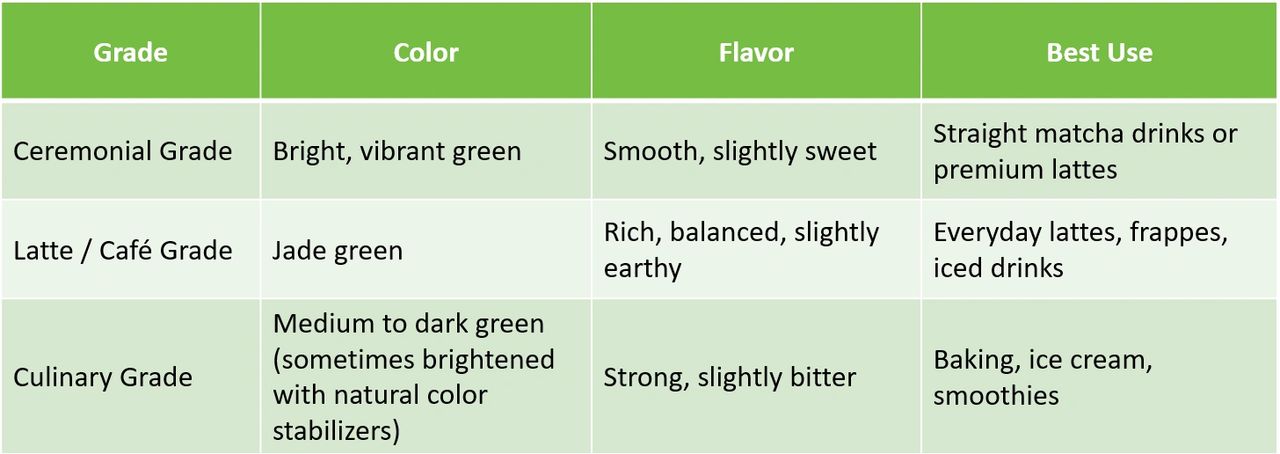
How to Choose the Right Grade for You
Choosing a grade has very little to do with prestige and everything to do with intended use. If your goal is to whisk matcha and enjoy it plain, ceremonial grade will give you the most refined experience. If you love matcha lattes, especially iced ones, barista or latte grade will produce fuller flavor against milk. And if you’re planning to bake, create desserts, or experiment in the kitchen, culinary grade is your best weapon.
If you're ready to try different grades for your drinks or recipes, we offer premium ceremonial, latte and culinary matcha with a factory-direct price. Matchia provides bulk matcha and matcha wholesale for cafés, bakeries and beverage brands, so feel free to reach out if you’re looking for quality, consistent flavor and reliable supply.